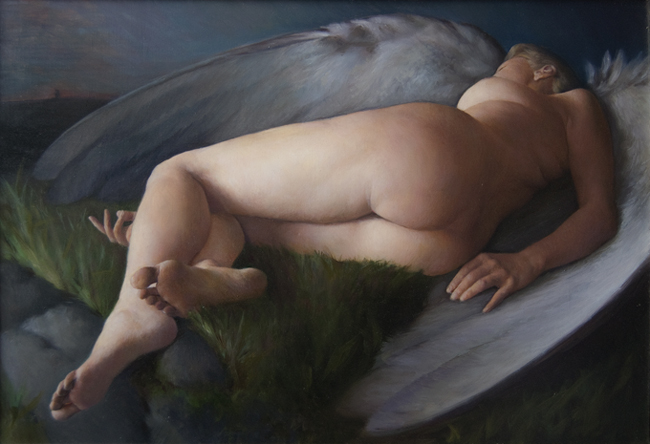
“Fall”, oil on linen, 2001 | Timothy Stotz
| INTENSIVE COURSES in Argenton-Chateau |
“Recall that everything must firstly be thought, I mean all of it, unto the smallest things; so, envision the drawing, color, and arrangement; do not work without thinking about it all equally, because Nature, your only true master, has not failed to recall a single thing.”
“Souviens-toi que tout doit être pensé d’abord, mais tout, jusqu’aux plus petites choses; alors, songe au dessin, à la couleur, à l’arrangement; ne travaille pas sans penser à tout cela également, car la nature, ton seul vrai maitre, n’a rien oublié.” – W.A. Bouguereau, 1900
–––––––––––––––––––––––––––––––––––––––––––––––––––––––––––––––––––––––––––––––––––––––
All upcoming Intensive Courses in Argenton-Chateau (79) are listed and linked on this page.
Click on any course title below to open the course description (or find the course title in the main menu at left.)
| Course Title | Course Dates |
| 2026 SUMMER INTENSIVE – drawing & painting the human figure | 11 June – 15 Aug 2026 |
| 2026 AUTUMN INTENSIVE in PARIS – painting the human figure | 5 Oct – 6 Nov 2026 |
Intensive Courses – General Overview
Studio Escalier offers two Intensive Courses in drawing and painting every year, in Argenton-Chateau (Poitou-Charentes), in the Summer and Autumn only.
Intensive Courses are open for full-time enrollment only. There is no option for part-time enrollment.
Entry is by application only. See individual course descriptions for specific pre-requisites.
Our intensive courses are offered as non-academic, principles-in-practice studio programs, for art students and artists of an intermediate to advanced level. “Non-academic” here means two things: not characterized by artificial or stylistic thinking, and not pursued for college credit.
“Principles-in-practice” means students will receive real-time coaching and critique at the easel, weekly lecture-demonstrations, and adequate time to study and practice the teaching on their own, in front of the model.
Our founding faculty do the daily intensive course teaching (Check the Faculty page for more information.).
The daily intensive work schedule is 6 hours of life-model, 5 days a weeks. Group lecture-demonstrations are given 1-2 times per week. One-on-one critique is given daily, 3 to 4 days a week, by one or both full-time faculty members. Figure poses will vary in length between 10 minutes and two weeks (50+ hrs.), depending on the principles being discussed and taught.
Full-time faculty occasionally work alongside students, producing both drawings and paintings.
The central subject of our intensive courses is drawing and painting the human figure from life. We will paint what we see, and discuss how to better see, imagine, mirror and present our visual experience of the human figure.
Our school of thought is dedicated to the subjective realization and creative discovery of each student, and purposefully excludes the teaching of nostalgic styles, material techniques, literary criticism or art-historicized formulas.
We study the figure visually, and as a living design — its structure, nature, character and the play of light upon it — in order to more deeply understand our physical selves, and our own perception of the visual field. This is our route to better understanding and speaking our traditional pictorial language. We are here to produce superlative painters who can stand in conscious visual relation to the figure, but who are not subservient to it.
It is not an artistic anatomy course, per se, although seeing and characterizing both basic and advanced figure structure is central to the course.
No cameras, mirrors, lenses, sighting devices, cameras or video recorders of any kind are used in the studio at any time. Drawing and painting are not forms of technology, but of art — of superior imagination, vision, and understanding.
Our school of thought can rightly be considered a reformed “eye-mind-hand” training: it strongly combines traditional elements of 18th c. French Baroque life-training with contemporary concepts of color, structure and subject matter. It is not a fragmentary, pre-modern or static inheritance, but a holistic, cumulative and creative one.
As in all the New York master classes from which our school descends — those of Frank Vincent Dumond, Frank Reilly, Edwin Dickinson and Ted Jacobs — we examine and discuss our fundamental perceptions and conceptions in depth. The teaching is a constellation of perceptual, conceptual and physical exercises. It introduces unmistaken principles from a unique, unbroken, master-apprentice tradition, and cultivates them in the student through daily studio practice and critique.
Although our school of thought also descends from a uniformly stellar Prix de Rome winning line of artists, our school is not a place to follow a commercial art curriculum from the Ecole des Beaux Arts circa 1864, nor to study or memorize the recipes, styles, or techniques of any past period. Nor is it a place to just “do your own thing.” It’s a place to study and practice a contemporary, traditional way to draw and paint the human figure from life (d’apres nature).
We are not here to demand compliance with a doctrine, but to perceive and apply vital principles and questions. Insofar as we have any, our artistic authority is spontaneous. We represent a new, international community of figurative artists who are not necessarily like-minded, and who are not proposing what’s “old”, what’s “timeless”, or what’s “new”, but what’s going on.